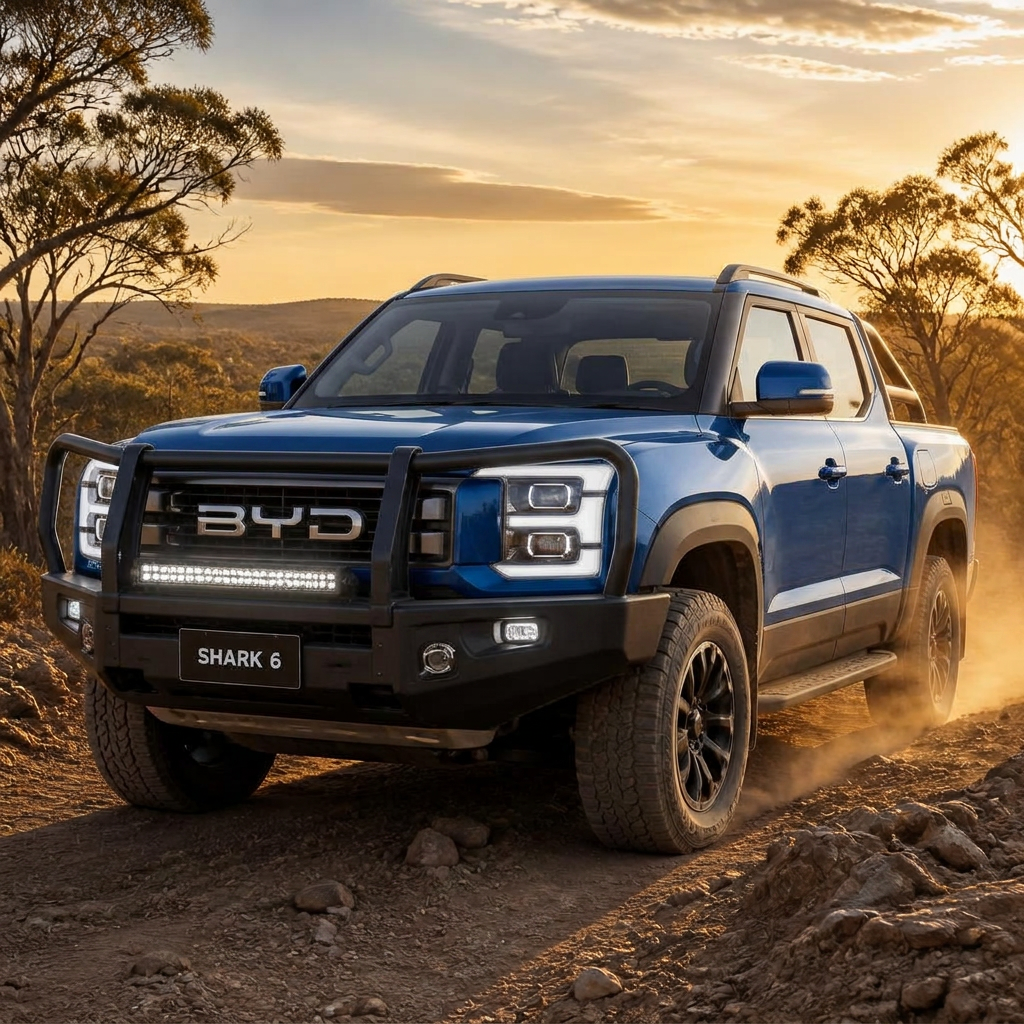
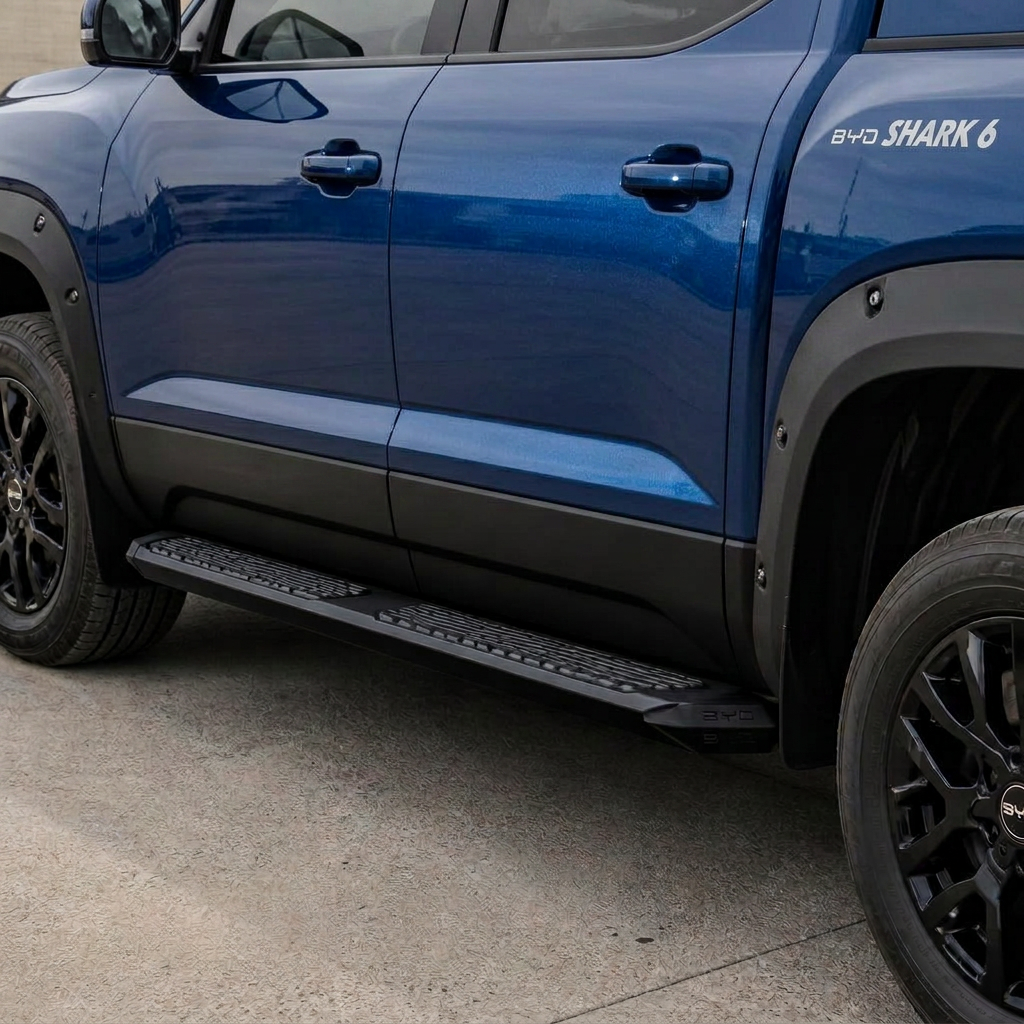
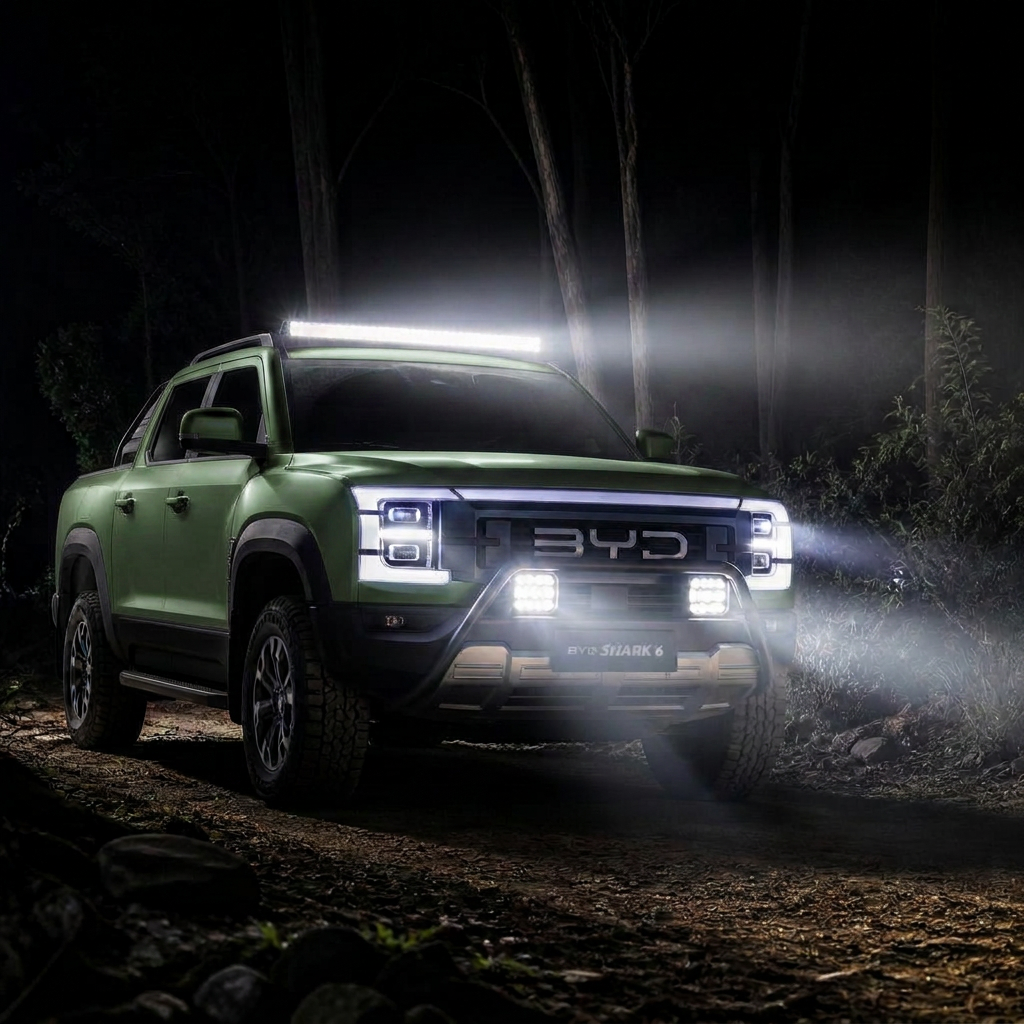
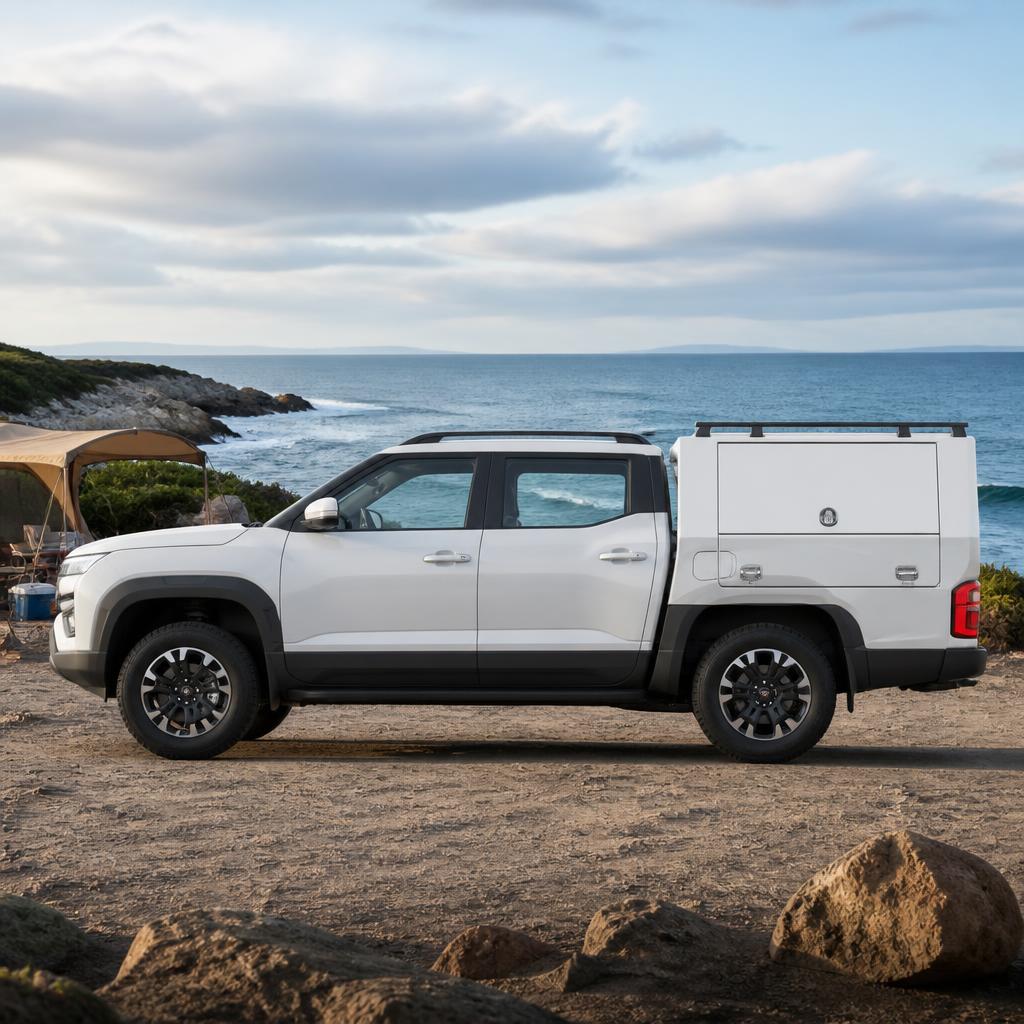
BYD Shark 6 Off-Grid Power Guide: Integrating V2L, DC-DC Chargers, and Auxiliary 12V Systems
The BYD Shark 6 has rewritten the dual-cab rules with its advanced DMO hybrid platform, a 29.58kWh high-voltage Blade Battery, and a built-in Vehicle-to-Load (V2L) system. However, for serious 4x4 tourers, campers, and tradies, relying solely on factory 240V outlets isn't enough to run constant-load 12V gear like fridges, travel ovens, air compressors, and canopy lighting. This comprehensive technical guide breaks down how the Shark 6's complex dual-voltage electrical architecture operates under load. We detail why tapping into the starter battery is risky, how to configure a warranty-safe auxiliary battery system, and how to seamlessly blend the vehicle's high-voltage charging capabilities with traditional 12V off-grid setups for the ultimate remote touring platform.
Understanding the BYD Shark 6 Dual-Voltage Architecture
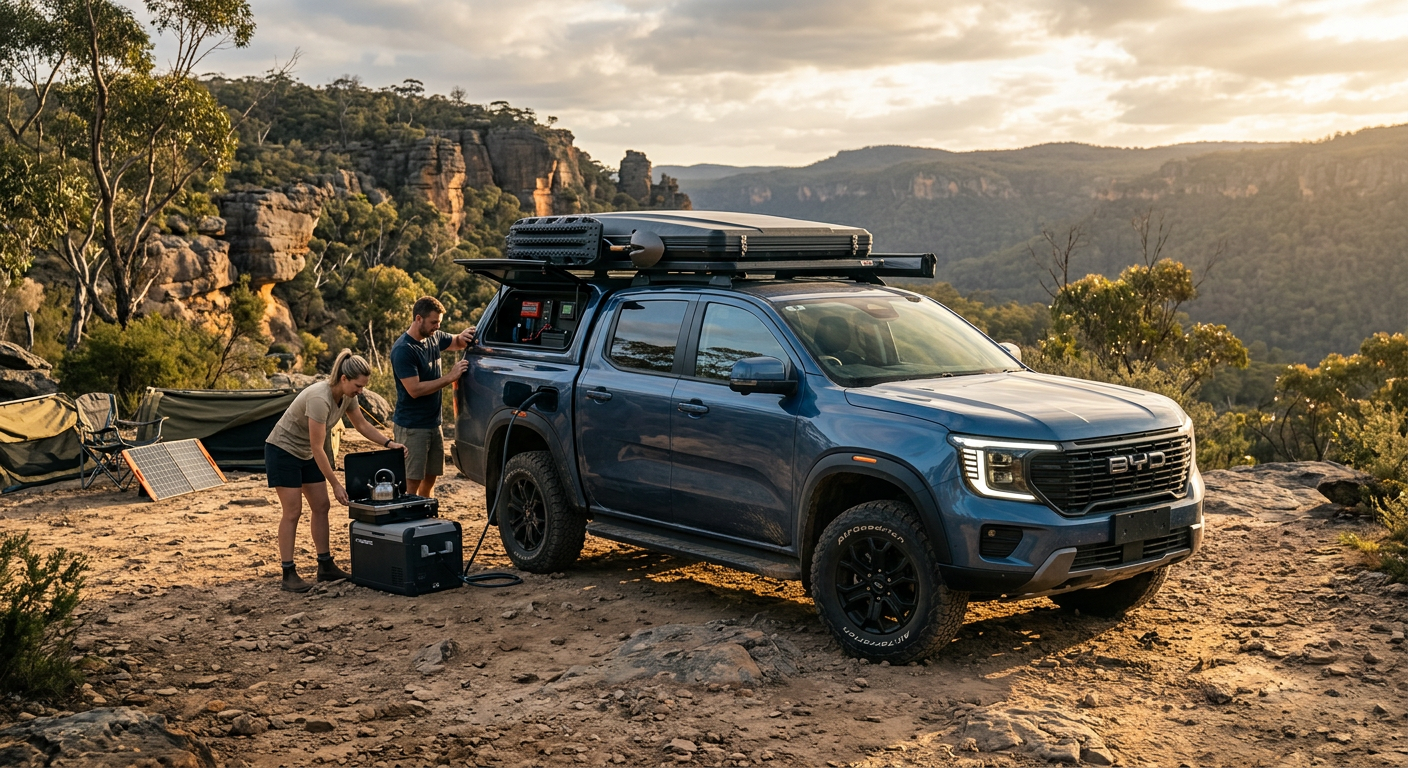
To successfully customise the electrical system of the BYD Shark 6, you must first understand the fundamental differences between its high-voltage traction system and its low-voltage accessory network. Unlike traditional diesel dual-cab utes that rely on a mechanical alternator to charge a 12V lead-acid starter battery, the Shark 6 utilises its massive 29.58kWh Blade Battery to feed a solid-state DC-DC step-down converter. This converter keeps the vehicle’s onboard 12V lithium starter battery charged while the hybrid system is active, powering the vehicle's computers, steering assistance, multimedia screens, and exterior lighting.
Crucially, the Shark 6 also features a highly capable Vehicle-to-Load (V2L) system, delivering up to 3.3kW of 240V AC power via outlets in the cabin and the utility tub. While this is a game-changer for running power tools, induction cooktops, and household appliances directly from the vehicle, it operates on an 'on-demand' basis. Leaving the high-voltage system switched on for days on end to run a 12V camping fridge or auxiliary LED lighting is highly inefficient, as it keeps the vehicle’s main control modules energised, causing unnecessary parasitic drain on the hybrid battery.
To create a reliable, long-term touring setup, you need a dedicated, isolated auxiliary 12V system. This ensures that accessories like 12V travel ovens, UHF radios, air compressors, and canopy lighting run independently of the hybrid drivetrain. By separating these loads, you guarantee that the Shark 6 remains fully functional and ready to drive, regardless of how many cold drinks you keep in the fridge over a long, hot weekend off the grid.
The Pitfalls of Tapping Directly into the Factory 12V System
In a conventional diesel four-wheel drive, adding 12V accessories is as simple as running a fused line from the positive terminal of the starter battery. Attempting this on the BYD Shark 6 can lead to severe system errors, warning lights, and potential warranty complications. The Shark’s 12V starter battery is managed by a highly sensitive Battery Management System (BMS) that constantly monitors current flow, state-of-charge, and temperature to regulate the vehicle's internal step-down converter.
If you connect a continuous load, such as an off-road fridge or a high-draw light bar, directly to the positive terminal of the factory 12V battery, the vehicle's computer will detect an unexplained current drop. This discrepancy can trigger fault codes in the hybrid control unit, falsely indicating a parasitic short-circuit or a failing 12V battery, which can cause the vehicle to enter a protective 'limp home' mode or refuse to switch on entirely.
Furthermore, because the factory 12V battery is relatively small in capacity, running sustained loads when the vehicle is powered down will drain it rapidly. Once this battery drops below a critical threshold, you will be unable to start the hybrid system, despite having a fully charged 29.58kWh traction battery sitting beneath the floorboards. Therefore, any auxiliary power draw must be isolated through a dedicated secondary battery system.
Designing a Canopy Dual-Battery Setup: DC-DC Charger Integration
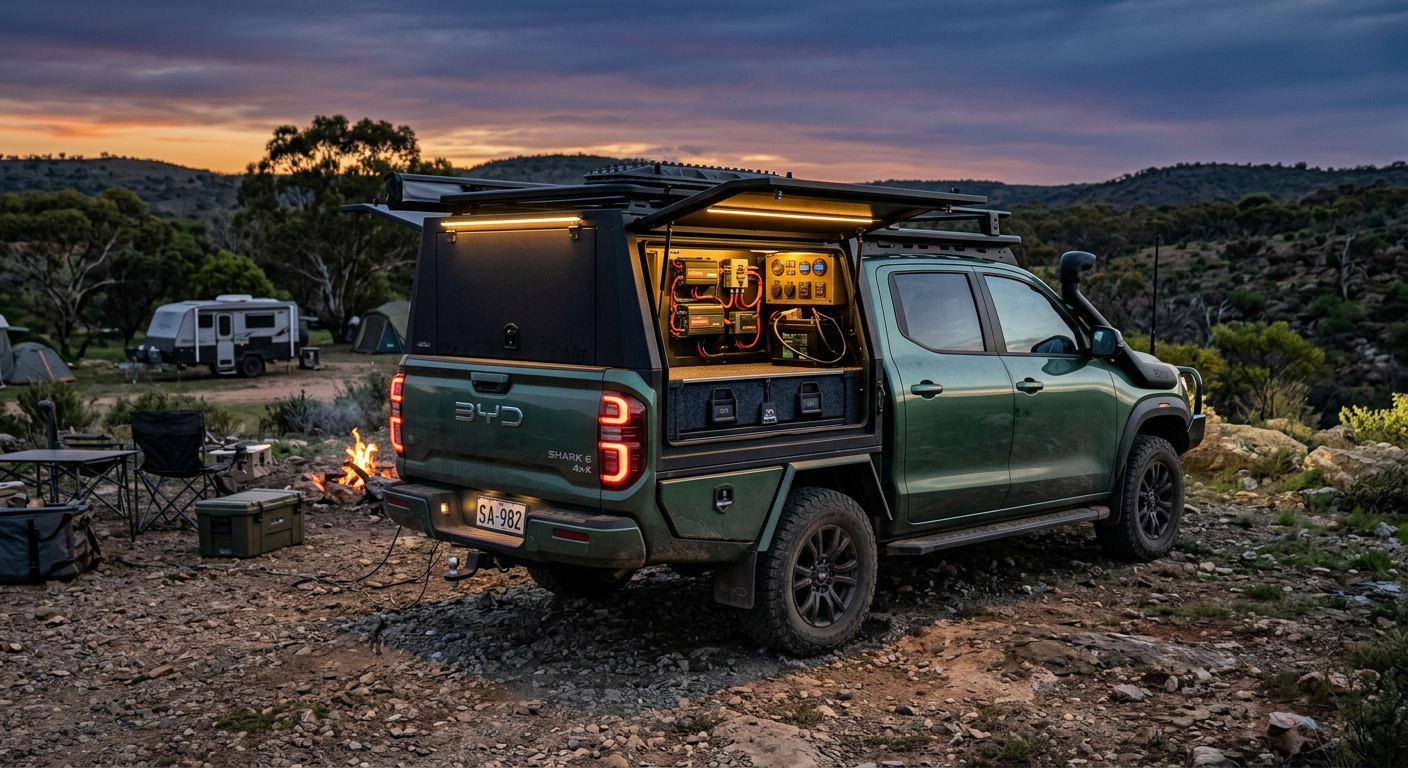
For tourers and tradies installing a canopy or tub organiser, a dedicated secondary Lithium (LiFePO4) battery is the gold standard. To charge this auxiliary battery safely from the Shark 6, you must install a high-quality DC-DC charger. The DC-DC charger acts as a smart firewall, drawing power from the Shark's 12V system only when the vehicle is 'running' (active) and stepping that voltage up to the correct profile required to charge your auxiliary lithium battery.
When choosing a DC-DC charger for the Shark 6, a model with a smart alternator ignition trigger input is essential. Because the hybrid system's internal DC-DC converter output can fluctuate depending on driving modes and regenerative braking, a standard voltage-sensing relay will not work reliably. By tapping the charger’s ignition trigger wire into a vehicle circuit that is only active when the hybrid system is in the 'Ready' state, you ensure that the auxiliary battery only charges when the vehicle is actively driving or idling with the hybrid system turned on.
Heavy-duty wiring must be routed from the engine bay or cabin fuse box down to the tub. Given the length of the run, we recommend using high-quality, double-insulated 6 B&S (13.5mm²) copper cabling protected by a heavy-duty MIDI fuse as close to the factory 12V take-off point as possible. This layout prevents voltage drop, minimises heat build-up, and protects the Shark’s factory wiring from any potential over-current events.
Optimising Solar Input for Extended Off-Grid Camping
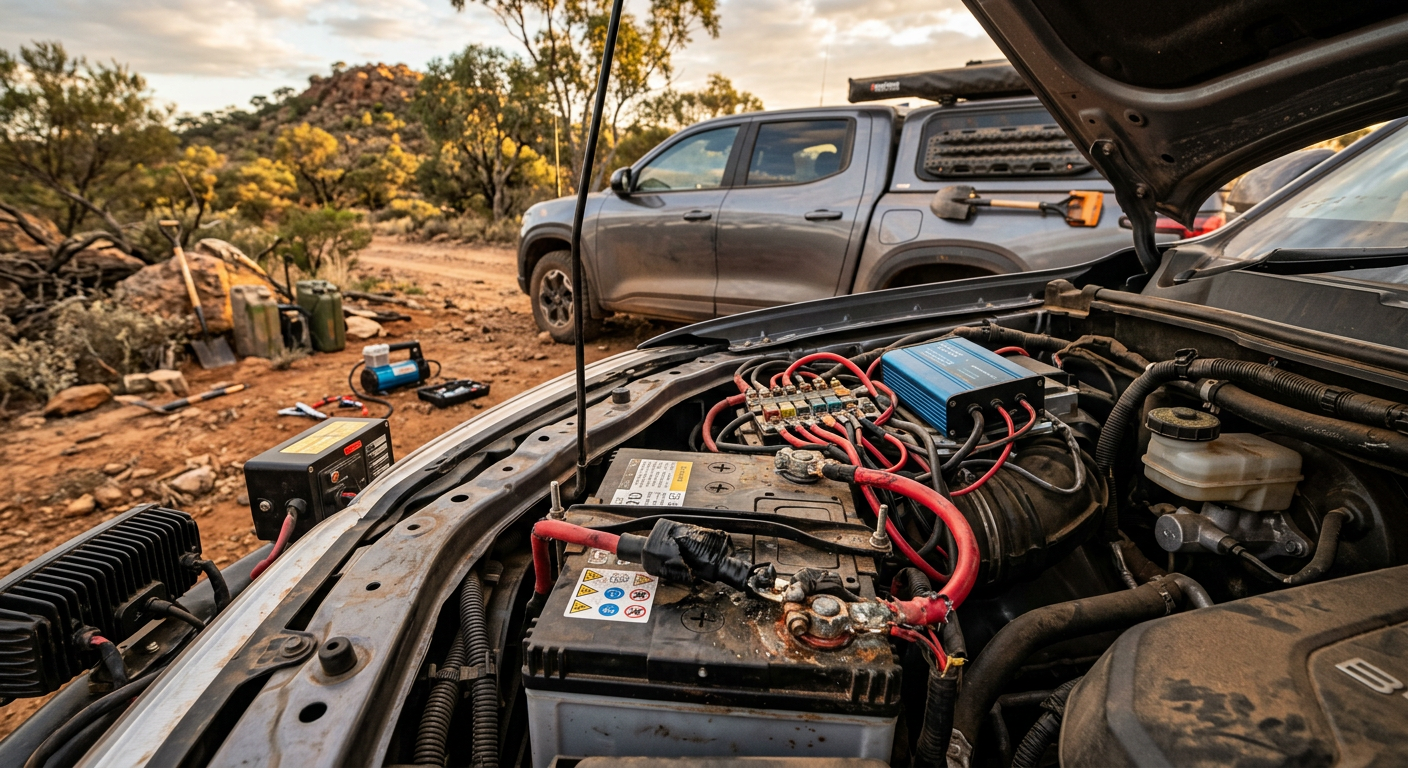
While the Shark 6 can top up your auxiliary system during transit, adding solar power is the ultimate way to achieve true off-grid independence. Integrating fixed solar panels on a roof rack, platform, or canopy roof allows you to keep the auxiliary 12V battery at 100% state-of-charge without consuming a single drop of fuel or percentage of the high-voltage Blade Battery.
We recommend choosing a DC-DC charger with a built-in MPPT solar regulator, such as the Redarc BCDC series or Projecta Intelli-Charge units. This dual-input design simplifies your wiring, allowing the charger to automatically prioritise solar power when you are parked at camp, and switch seamlessly to vehicle charging once you start the hybrid system and hit the road.
For roof-mounted solar installations on the Shark 6, focus on lightweight, low-profile monocrystalline panels to preserve the vehicle’s aerodynamics and payload capacity. Alternatively, a dedicated solar input Anderson plug mounted in the rear bumper or side panel of the canopy allows you to connect a portable folding solar blanket, which can be angled directly at the sun while the vehicle remains parked in the shade.
Harnessing V2L and 12V Power Simultaneously
The real magic of the BYD Shark 6 occurs when you combine its factory V2L capabilities with a custom 12V auxiliary system. This hybrid power approach allows you to run high-voltage, high-draw appliances via V2L while your low-draw, critical accessories run continuously off your 12V auxiliary battery. For example, you can power an induction cooktop, coffee machine, or battery charger for power tools using the 240V outlets in the tub, while your 12V system keeps your fridge running, your camp lights on, and your water pump operating.
To manage this efficiently, you must use the BYD infotainment screen to set a 'discharge limit' for the high-voltage battery. Typically, setting this limit to 20% or 30% ensures that the vehicle will automatically shut down the V2L outlets if the Blade Battery drops to that level, leaving you with plenty of hybrid range to drive to the next charging station or town.
This dual-system setup also provides a redundancy loop. If you face a string of overcast days and your solar panels cannot keep up with your 12V fridge's power demands, you can plug a standard 240V mains battery charger into the Shark’s V2L outlet and use the vehicle's massive hybrid battery to rapidly charge your auxiliary 12V lithium battery back to full capacity in a matter of hours.
Safe Installation Standards and Warranty Protection
Given the advanced, high-voltage nature of the BYD Shark 6, safety and professional installation standards are paramount. Under no circumstances should any aftermarket accessories be connected to, or routed near, the high-voltage orange cables that run beneath the vehicle. These cables carry high-voltage direct current (HVDC) and are strictly off-limits to everyone except certified high-voltage technicians.
When mounting auxiliary electrical components in the tub or canopy, ensure all modules are housed in dust-proof and vibration-resistant enclosures. Use premium marine-grade tinned copper wire, heat-shrink connectors, and protective split-conduit routing along the chassis rails, keeping all wiring well clear of hot exhaust components, moving suspension parts, and sharp metal edges.
By adhering to these strict installation practices, using quality isolators, and ensuring your auxiliary system draws power only when the vehicle's ignition is active, you preserve the integrity of the Shark 6’s sophisticated electronics. This professional, isolated approach ensures that your off-grid touring upgrades remain safe, highly reliable, and fully compliant with BYD's vehicle warranty guidelines.
Build your Shark 6
Every accessory referenced in this article is available in our catalogue, engineered specifically for the BYD Shark 6 platform and shipped worldwide.
More BYD Shark reading
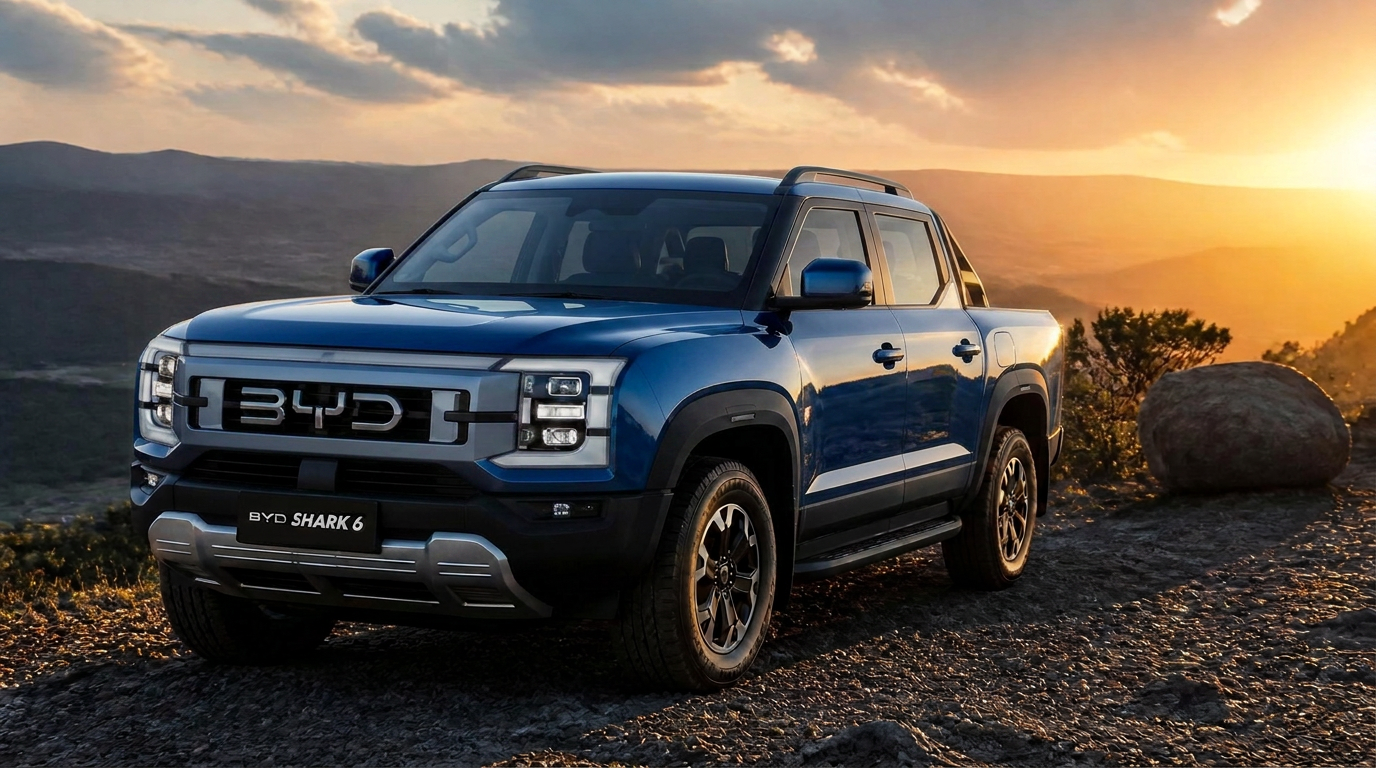
BYD Shark 6: What the Media and Owners Are Saying
The BYD Shark 6 has generated more media coverage, owner debate and showroom interest than almost any other new dual-cab ute in recent years. Reviewers have praised its refinement, standard equipment and plug-in hybrid running costs, while critics have focused on towing limits, real-world consumption when uncharged and early accessory availability. Buyers are also drawn to the Shark 6's modern design, vehicle-to-load capability and quiet electric driving around town. This article collects the strongest themes from the coverage and explains what they mean for the person who actually owns the vehicle or is considering one.
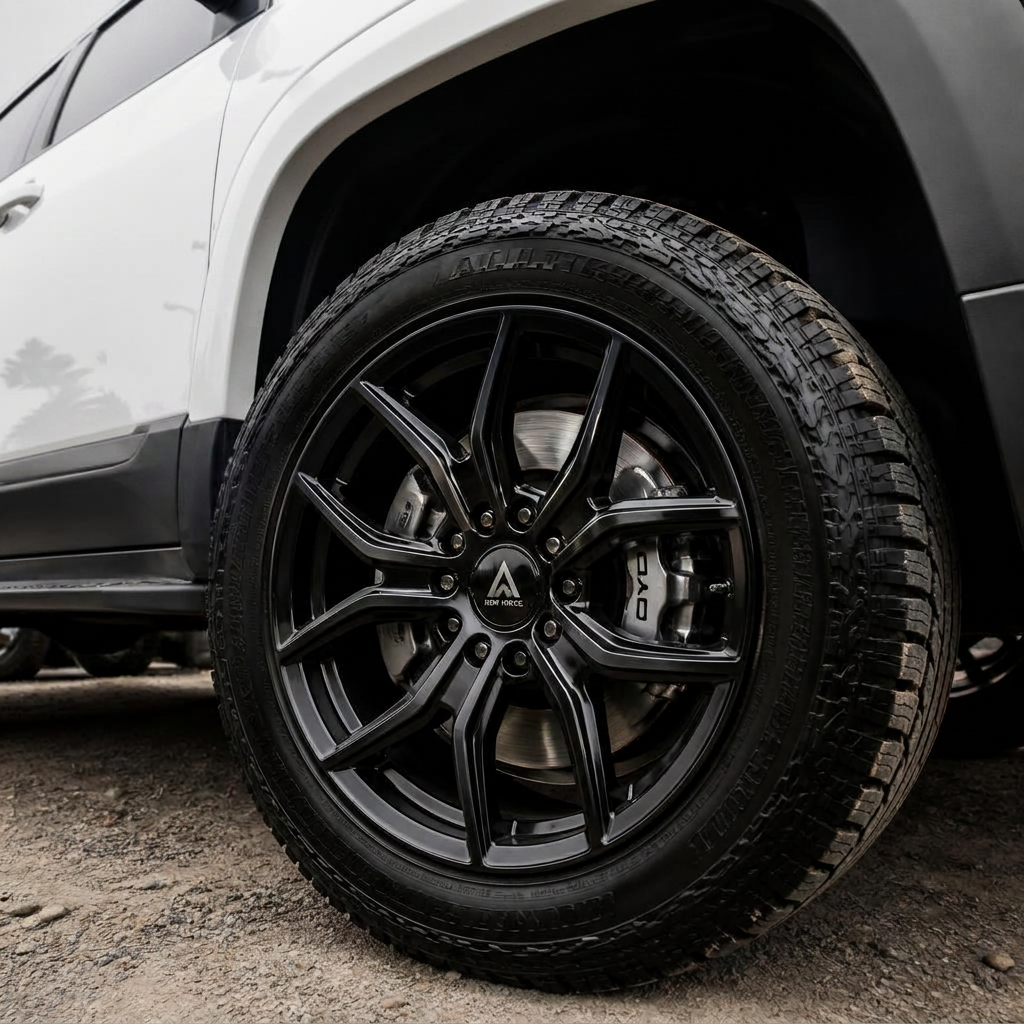
BYD Shark 6 Design and Styling: Why It Works
The BYD Shark 6 is one of the better-resolved designs in the dual-cab ute class, and understanding why it works helps you choose upgrades that improve the vehicle rather than clutter it. Its proportions are balanced: the cabin sits well back, the bonnet is long enough to look substantial, and the squared-off wheel arches give it a planted stance. The front end is clean and modern, with slim lighting and a wide grille that reads clearly from a distance. This article explains how the Shark 6's surfacing, stance and detailing work together, and which styling upgrades — wheels, bars, flares, wraps and trim — look most cohesive on the platform.
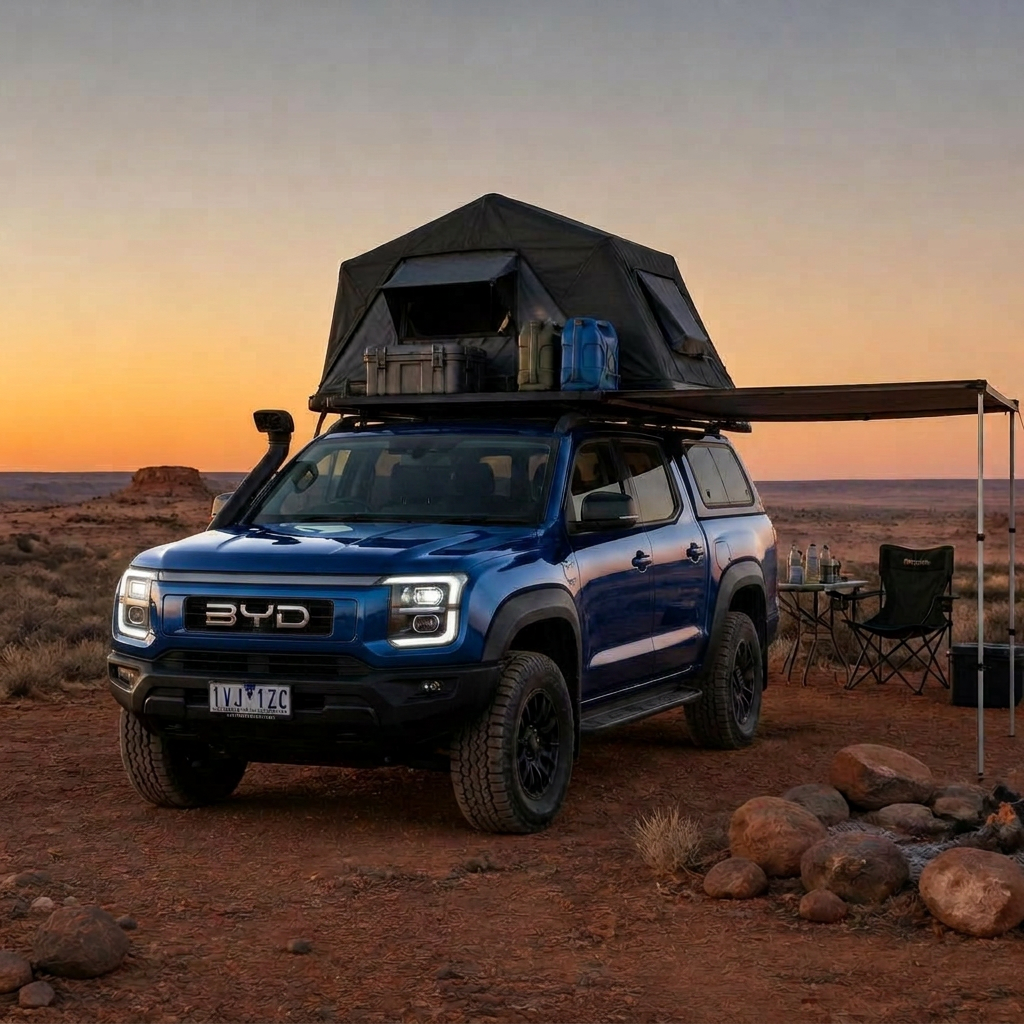
BYD Shark 6 Performance and Capability Explained
Instant torque from dual electric motors, a low centre of gravity from the battery pack and a near-silent cabin make the BYD Shark 6 drive very differently from any diesel dual-cab. The plug-in hybrid drivetrain delivers strong acceleration from rest, confident overtaking and relaxed cruising, while the electric-only range covers most daily commutes when charged at home. In this article we explain how the turbocharged engine and electric motors work together, what the battery range means in real life, how towing and payload affect behaviour, and how the Shark 6 performs on gravel tracks and off-road terrain compared with a conventional ute.